DOOH at Universities: Facts
Facts and figures: DOOH at universities
The campus is the touchpoint with the highest affinity among young audiences.
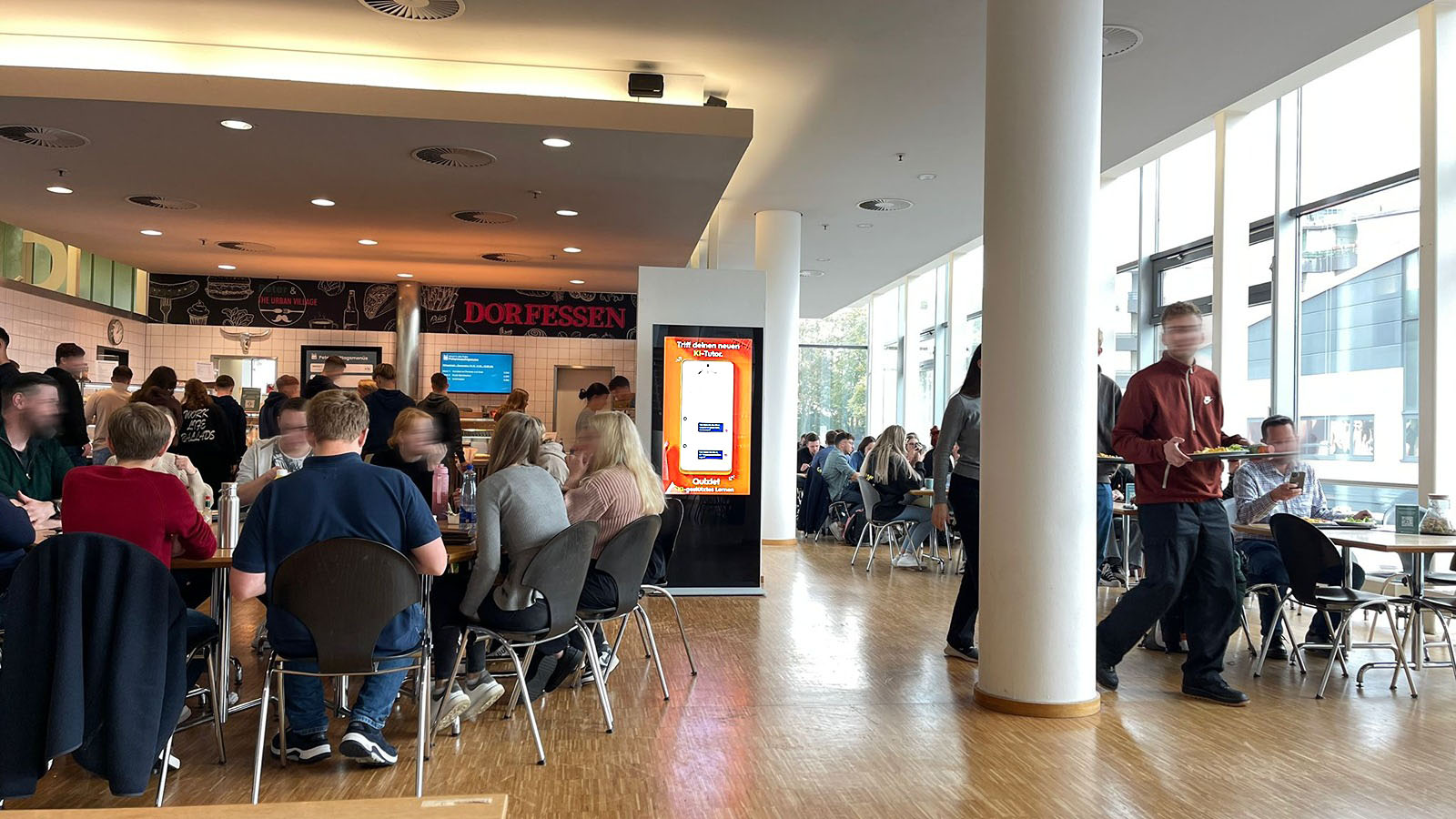
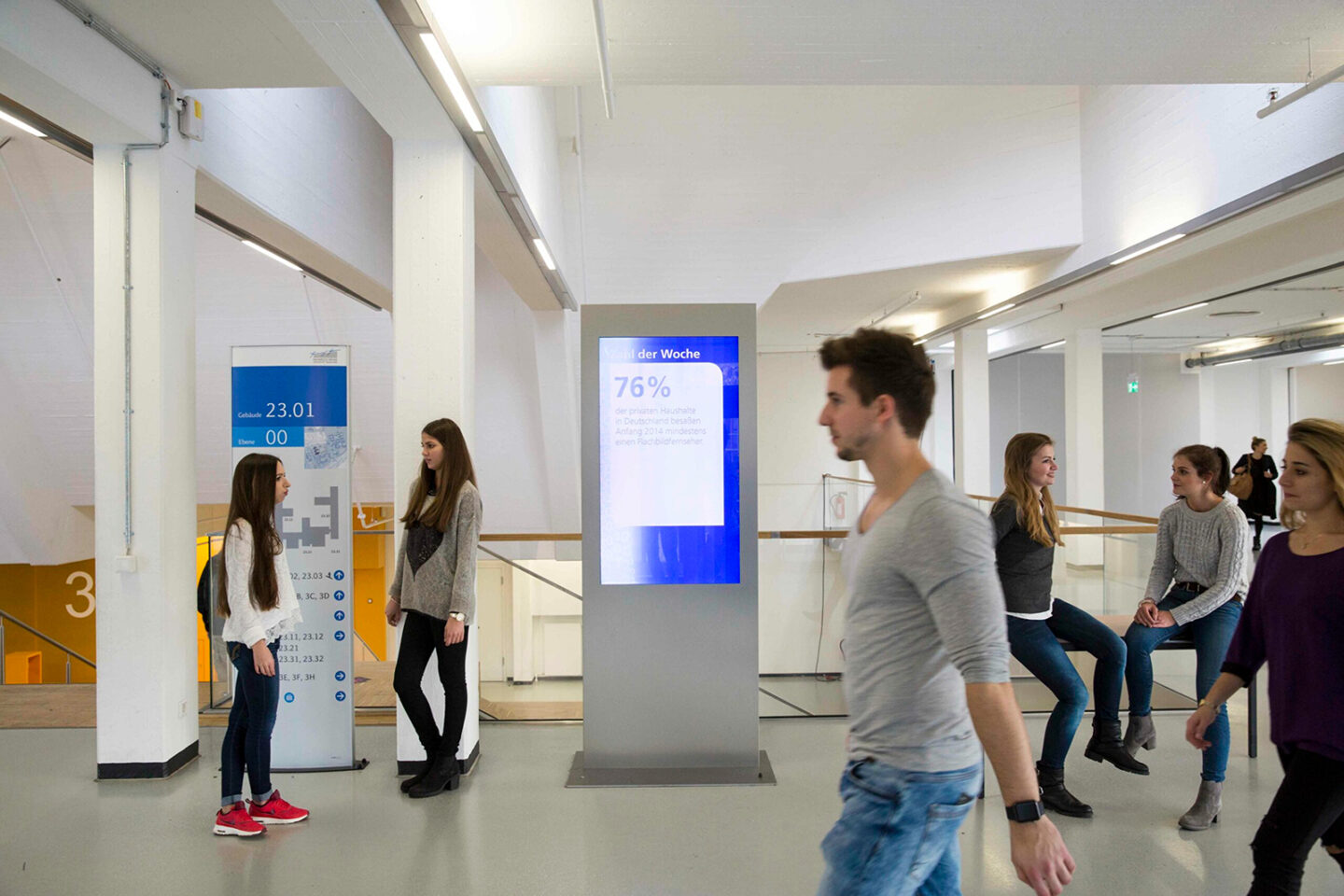
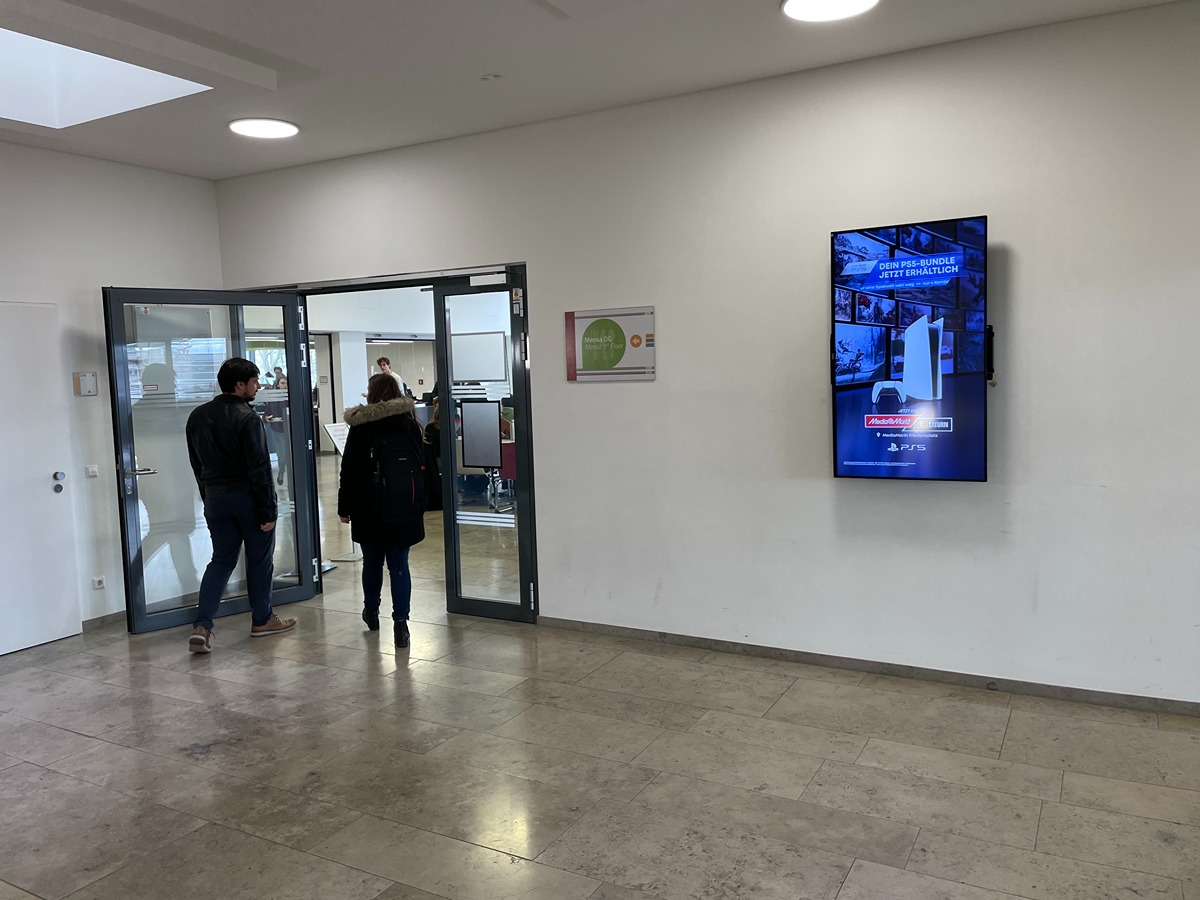
Whether heading to a lecture in the lecture hall, grabbing a bite to eat in the cafeteria, or studying in the library, universities are places where students have to cover long distances! And everywhere they go, they encounter digital screens, totems and huge video walls. DOOH advertising media have become an integral part of university communications and offer many opportunities to communicate with students—not only for universities and student unions. Companies also benefit from the appeal of the infotainment mix, which combines editorial content such as weather forecasts, current news and event announcements with targeted advertising. And the offering on campus is popular: studies clearly demonstrate the reach, relevance and acceptance of Digital out of Home (DOOH) at universities, well ahead of other relevant touchpoints such as cinemas, restaurants and late-night shops.* One indication of this is research showing that young, mobile audiences in particular are considered highly DOOH-affine, with weekly reach among 20- to 29-year-olds standing at 97 percent.**
Sources: * Public & Private Screens 3.0 (2025)
** IDOOH Reach Study (2023)

Extensive DOOH network for maximum coverage across the higher education landscape
Digital out-of-home advertising media are now widespread at German universities: companies can book more than 800 DOOH screens at over 125 universities throughout Germany via Insertion Order (IO). According to the 2025 study “Public & Private Screens 3.0” by industry association IDOOH, the DOOH screens generate 5.87 million gross contacts per week.*
Acceptance and impact: Why DOOH scores with young audiences
From the perspective of young audiences, there is a lot to be said for out-of-home advertising: in a 2025 GWA survey, only 3% of 15- to 30-year-olds said that out-of-home advertising annoyed them the most; at the same time, 45% count out-of-home among the channels where they notice advertising. The survey is based on a sample of 2,000 Gen Z respondents in Germany (conducted with Appinio), providing a solid data basis for strategic media planning.***
International findings support this picture: According to the 2024 OAAA/The Harris Poll study, 73% of respondents view digital out-of-home advertising positively, and 76% of the youngest DOOH viewers took a specific action afterwards, such as visiting a website or a store.****
Sources: * Public & Private Screens 3.0 (2025)
*** GWA Survey on Perception (2025)
**** OAAA/The Harris Poll Study (2024)
Technology boosters:
Programmatic, data and dynamic capabilities with “Campus Screens”
If you want to advertise at universities using Programmatic DOOH (pDOOH), there is no getting around Campus Screens
Here’s how Programmatic DOOH (pDOOH) with Screens works in practice:
Campaigns are purchased through Demand-Side Platforms (DSPs), which connect to marketers’ DOOH inventory via Supply-Side Platforms (SSPs). The media buying itself is automated and takes place in real time, enabling flexible bookings and short-notice adjustments. Thanks to integrations with Perion (Hivestack), Broadsign Reach, Vistar Media, Ströer SSP and SSP1, Campus Screens can be seamlessly integrated into digital media plans and centrally managed. Depending on the campaign objectives, campaigns run either as a Preferred Deal or a Guaranteed Deal, with guaranteed inventory and defined placements. Delivery is refined using frequency capping, geo- and time-targeting (dayparting), weather triggers and Dynamic Creative Optimization (DCO). In addition, ad placements are also available through the Open Auction, where they can be won by the highest bidder.
Discover DOOH at universities now!