
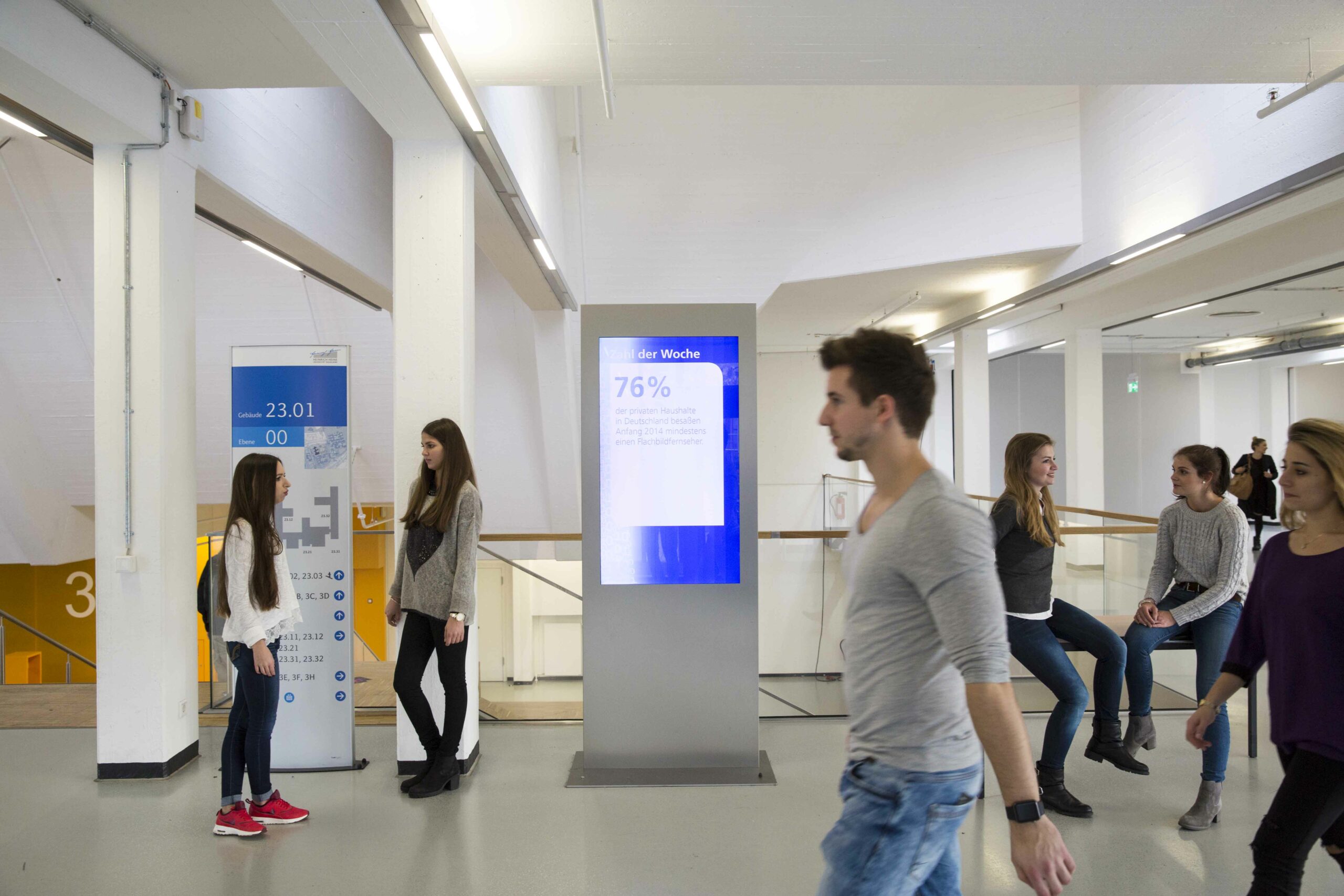
DOOH – Moving content
on campus.
Infotainment makes DOOH an eye-catcher.
Digital out-of-home advertising has long been an integral part of modern university communication. With over 800 screens at more than 125 colleges and universities, we market the largest unified DOOH network in the German higher education landscape.
The digital displays are located in high-traffic areas, including entrance areas, lecture hall access points, libraries, as well as heavily frequented dining halls and cafeterias. Whether for product campaigns or targeted recruitment marketing: Placement in the direct environment of students ensures maximum visibility and precise targeting within relevant audiences.
20.56 million
Gross contacts per month, or a net weekly reach of over 1.16 million students, are achieved with digital out-of-home advertising at the university.

Source: Public & Private Screens (2022)
DOOH as an integral part of the marketing mix!
Digital advertising spaces are not only often found at airports, main train stations or rail stops. Digital out-of-home advertising (OOH) has also meanwhile become an integral part of the campus landscape and, as a touchpoint for advertisers, has an undeniable advantage: nowhere else does advertising reach the young target group as precisely as on campus. The IDOOH Institute for Digital Out of Home Media conducts, with the Public & Private Screens 3.0, a large, continuously updated market media study to capture all digital out-of-home advertising media in Germany. According to the 2025 edition of the study, DOOH advertising at universities reaches 85% of the target group shares of gross advertising contacts in the 14- to 29-year-old target group – by far the highest value, even ahead of other relevant touchpoints such as gyms, cinemas or the hospitality sector.
Large DOOH advertising spaces that stand out
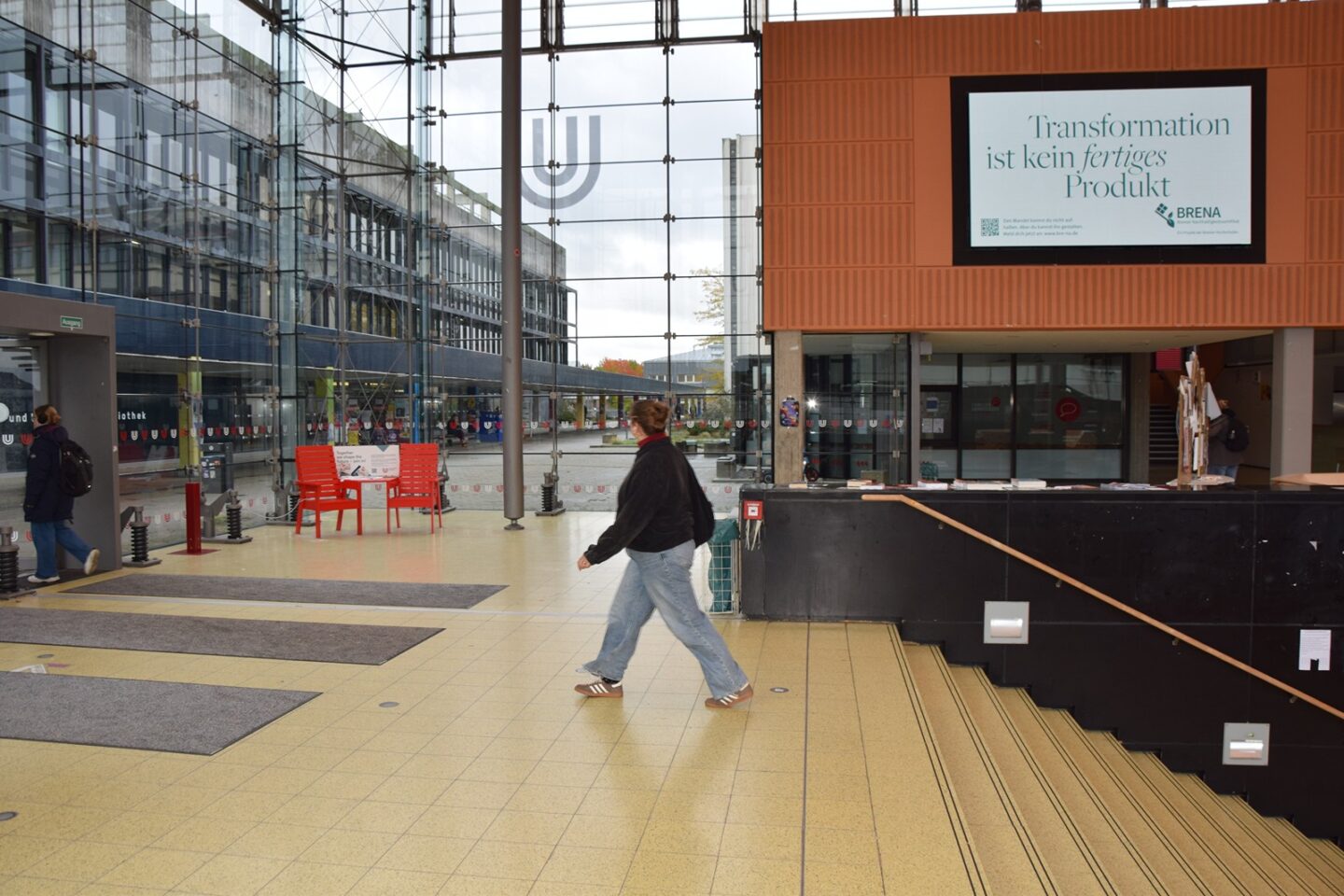
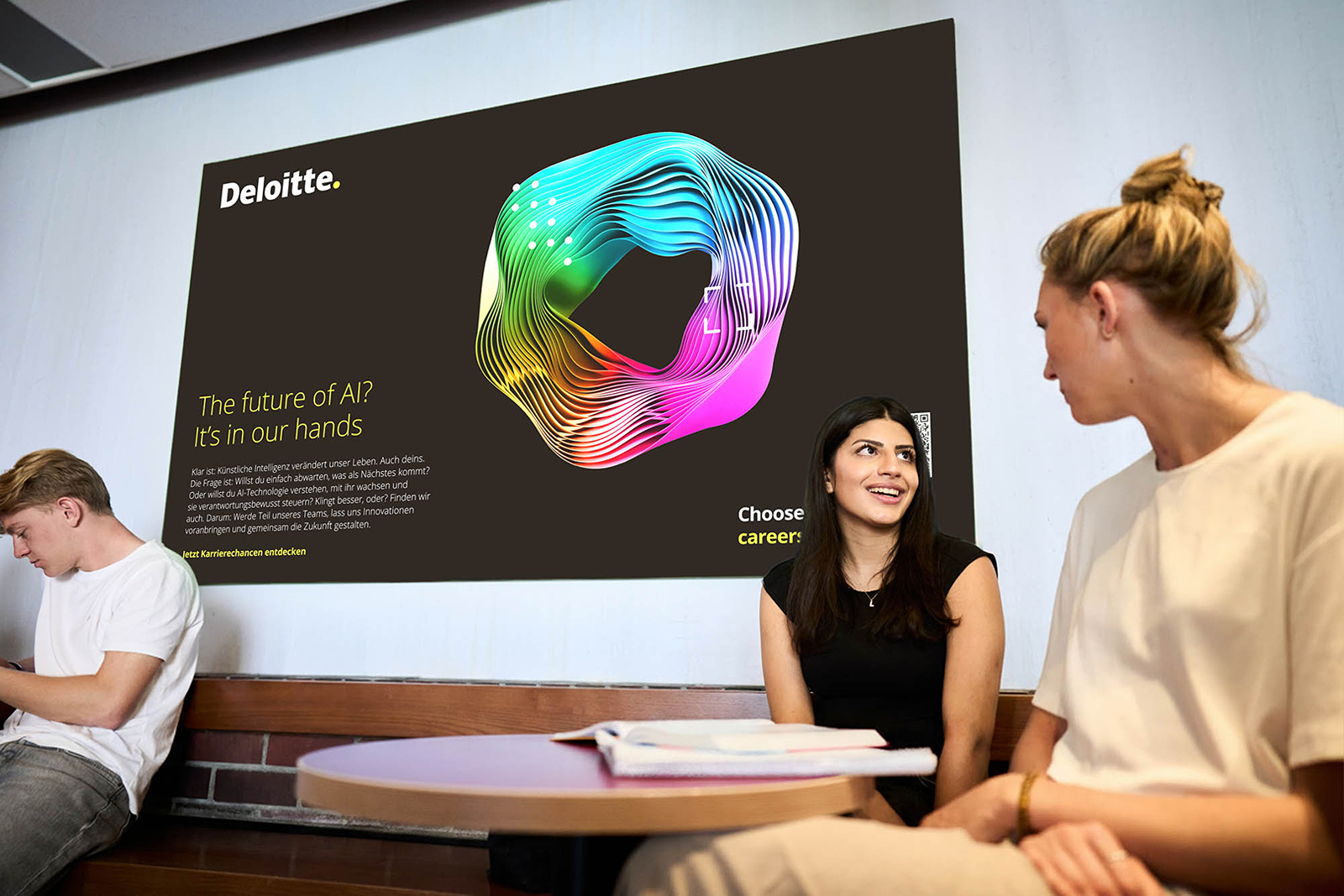
Up to 65” large DOOH screens offer plenty of space for advertising messages. Even more impressive are the video walls, which enable a screen diagonal of over four meters.
Well placed and where the target audience is
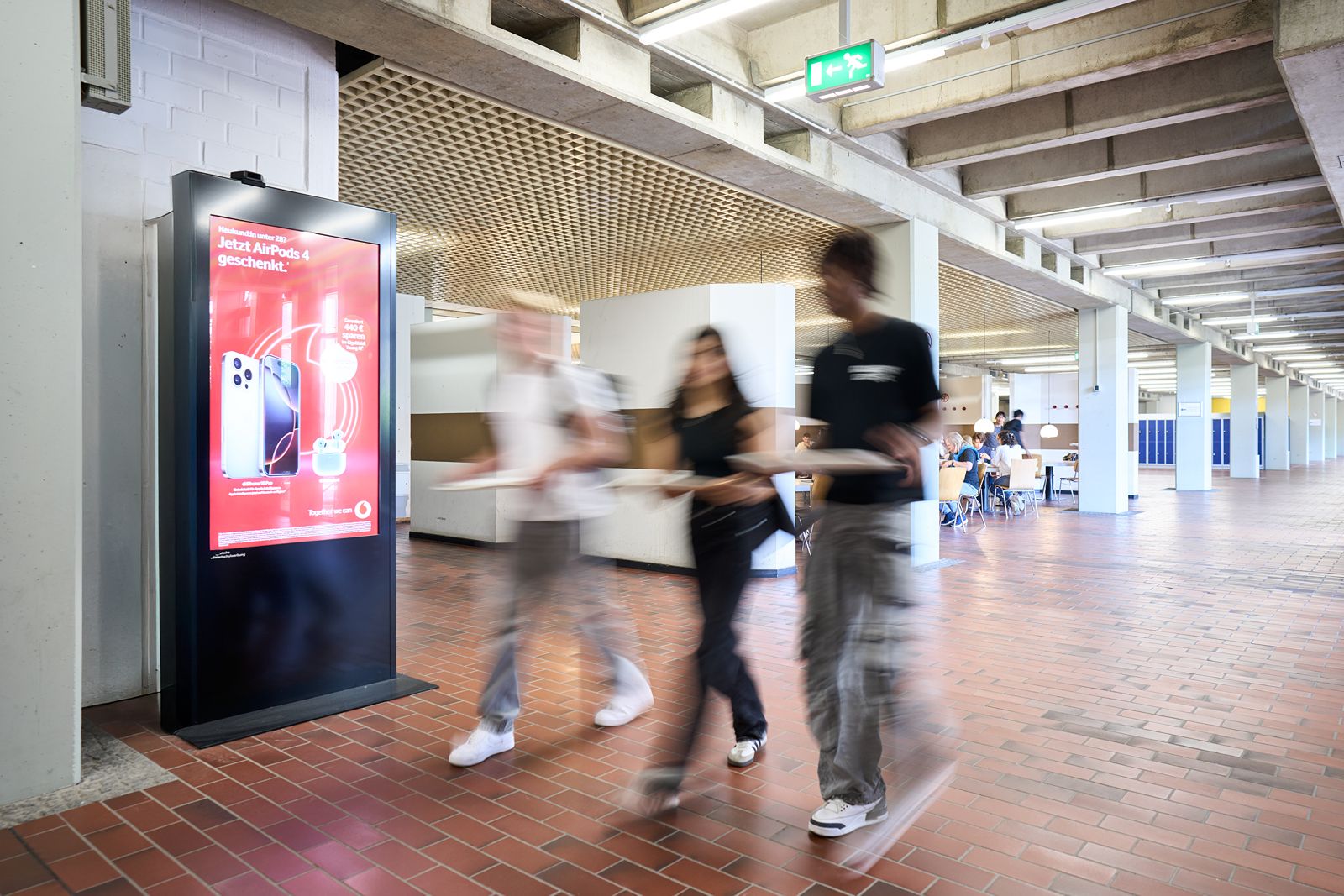
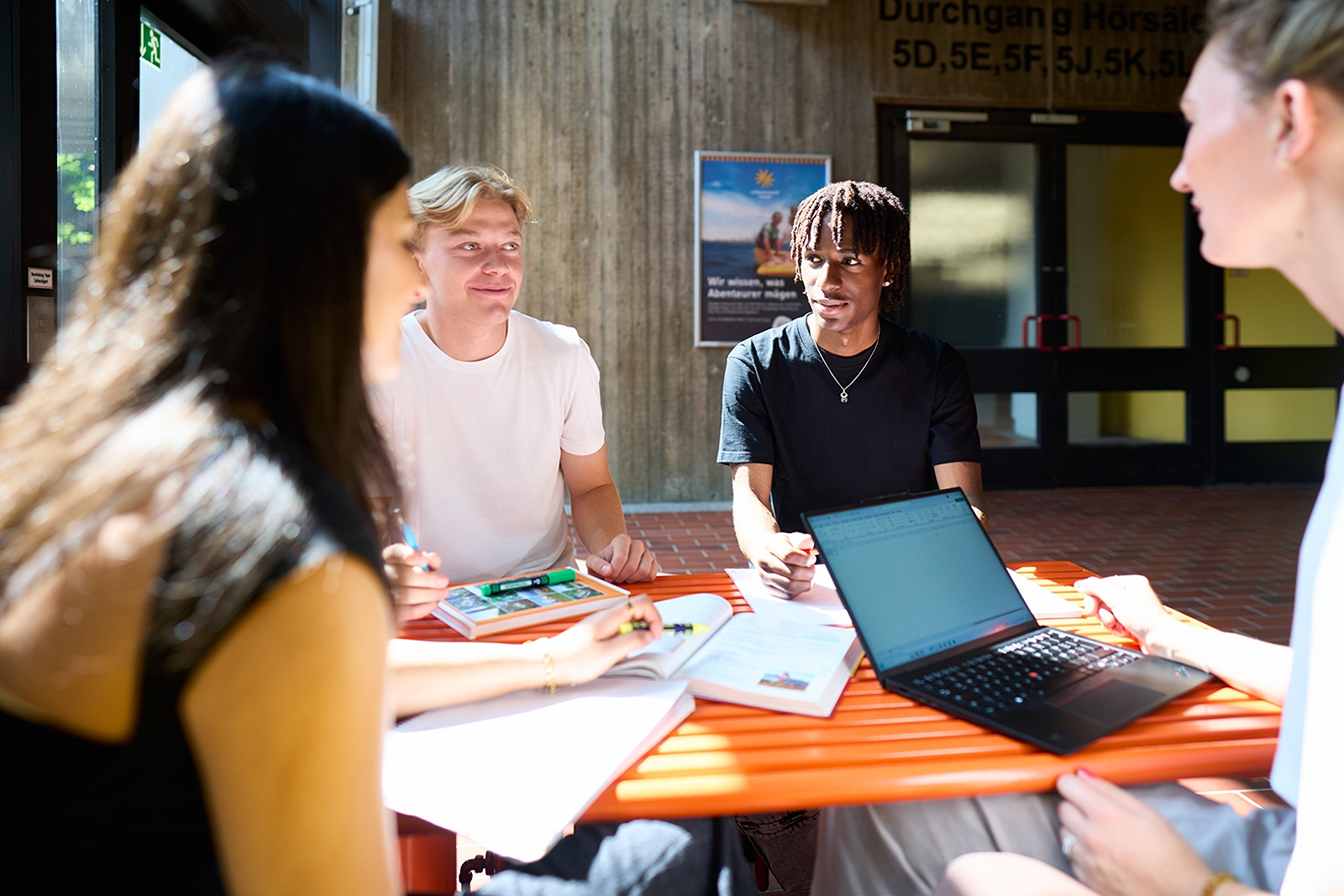
First-class placement of our DOOH screens and steles in entrance areas, at access points to lecture halls, in relevant departments, in university sports facilities, in dormitories, and in well-frequented canteens and cafeterias.
Moving content attracts attention
The DOOH screens are tailor-made for dynamic advertising content. Animated ads or videos practically attract the attention of the target audience.
Razor-sharp images
DOOH screens with Full HD or even 4K resolution provide impressive images that remain in memory for a long time.
Available at short notice and flexible
Motif changes at the click of a mouse, optionally also via a dedicated HTML interface, make digital out-of-home advertising campaigns individually plannable with us and unbeatable in terms of agility.
Well mixed for great added value
The mix of general news, weather forecasts, university content, menus, and editorially prepared content brings variety to the screen.
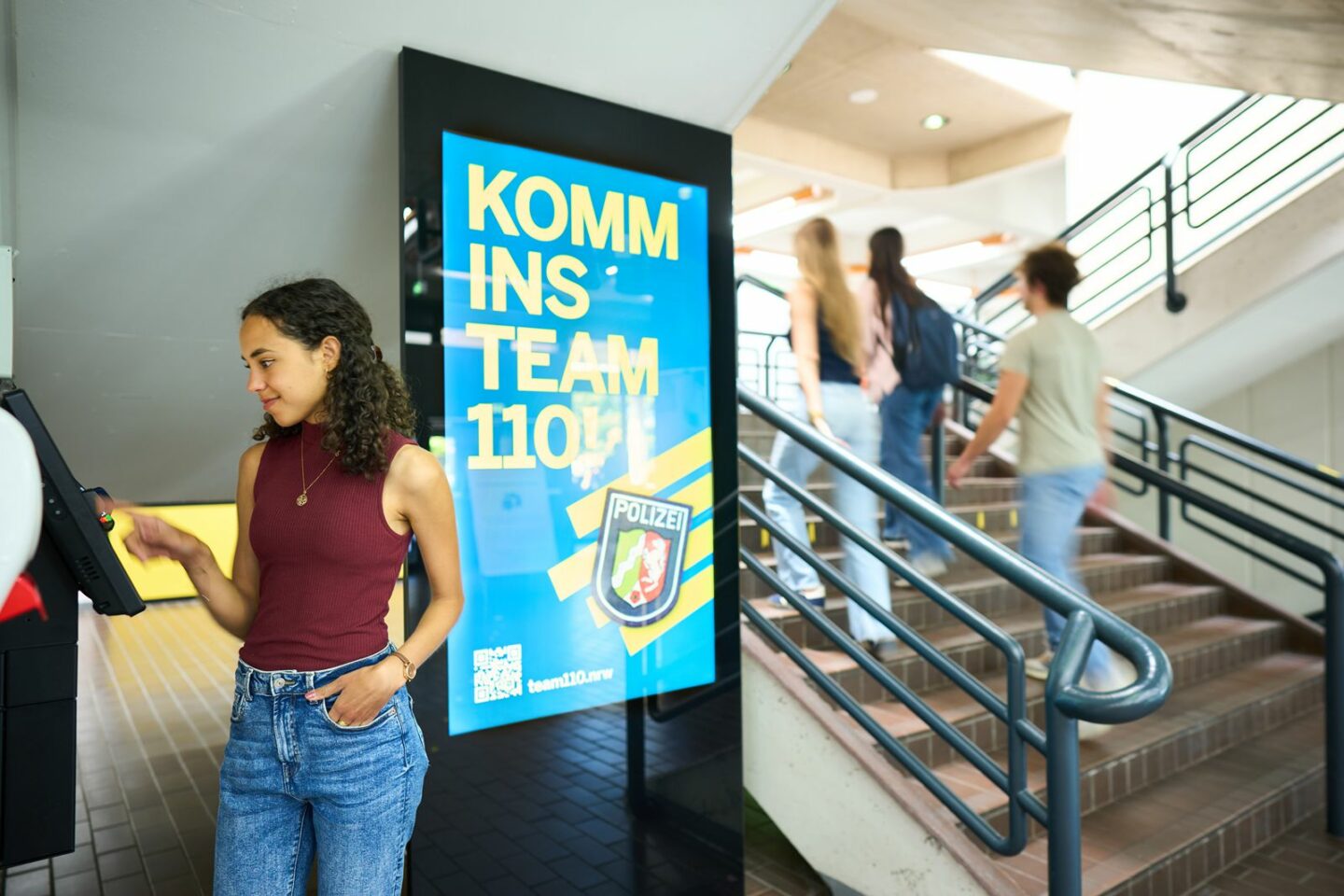
Book DOOH on campus programmatically!
Programmatic digital out-of-home advertising (pDOOH) on our campus screens is a particularly effective way to reach students in a targeted manner.
As early as 2021, our Campus Screens have been connected to the leading Supply Side Platforms (SSPs). Thanks to the sometimes long-standing collaboration with Hivestack, Broadsign Reach, Vistar Media and SSP1, you can book your campaigns via all common Demand Side Platforms (DSPs).
This makes us the leading provider in the field of pDOOH at German universities and student services organizations. With over 250 screens, pillars, and video walls at more than 40 university locations, you benefit from the largest programmatically bookable DOOH network in the German university landscape. Click here for news about the expansion of the pDOOH network.
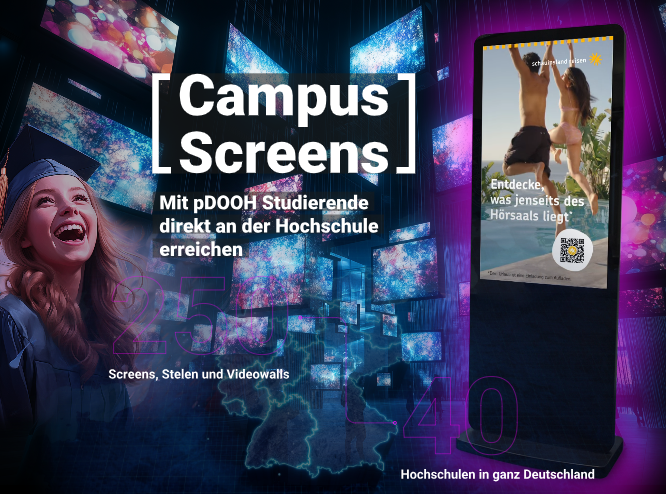
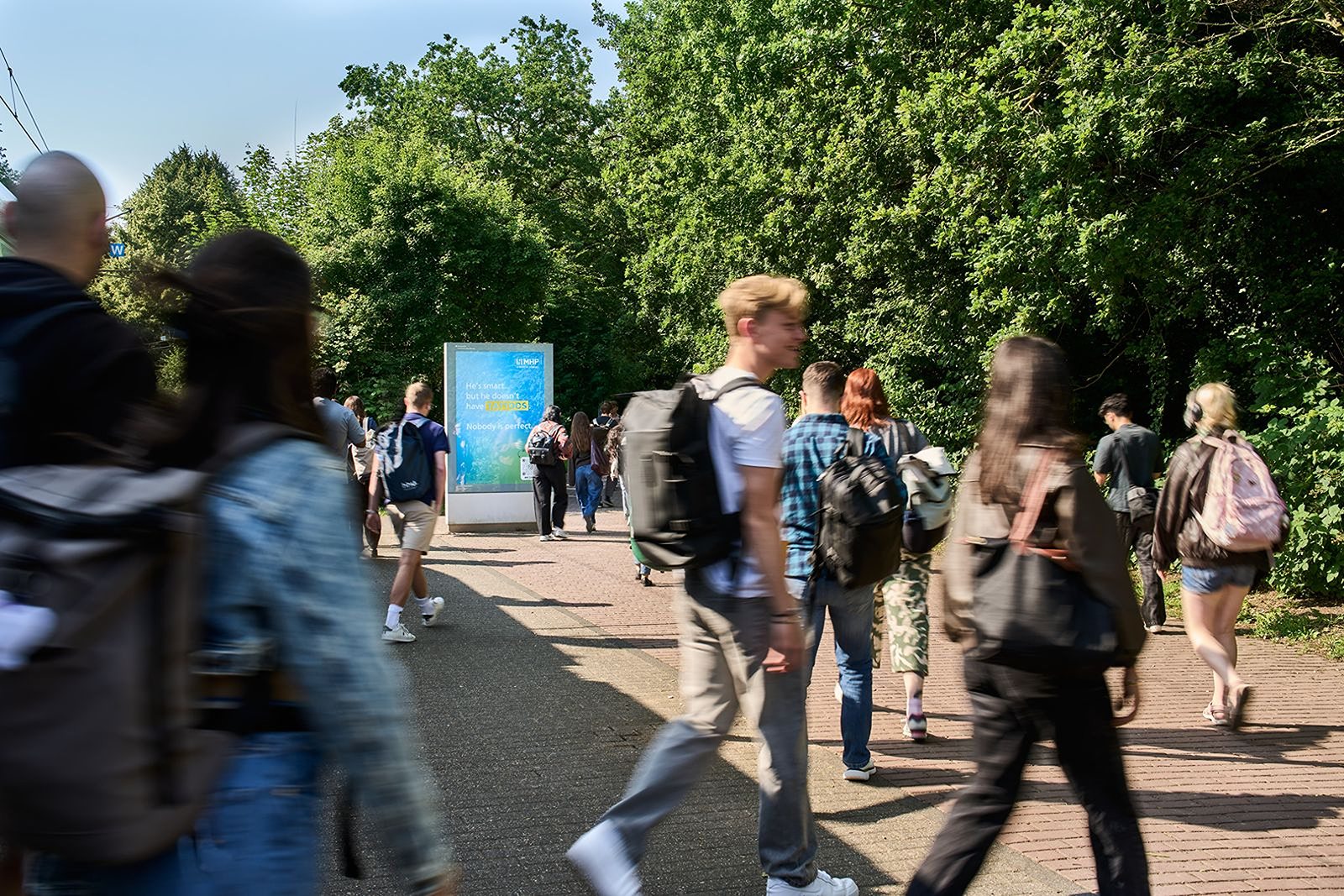
Impressions of digital advertising media on campus:
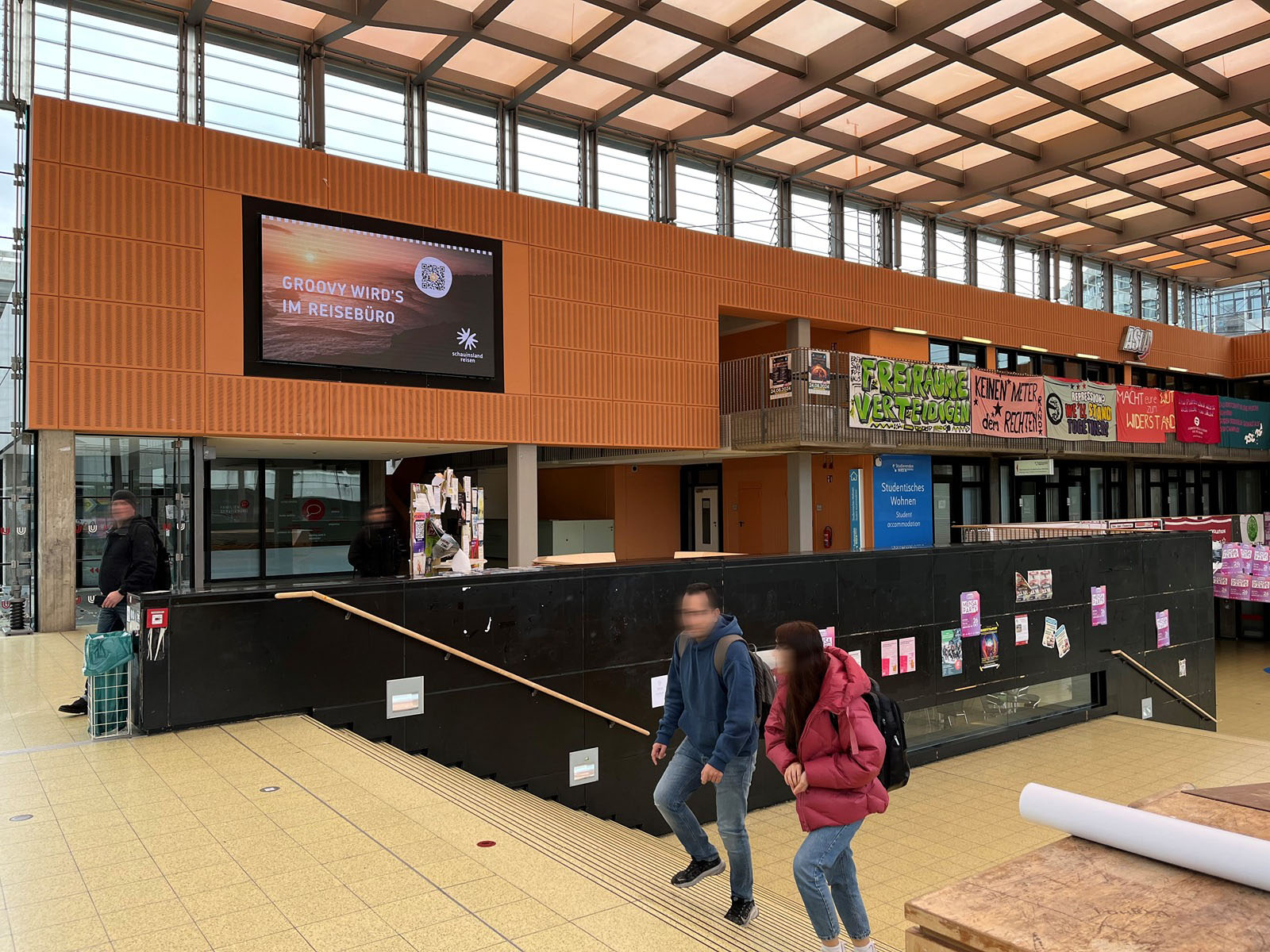
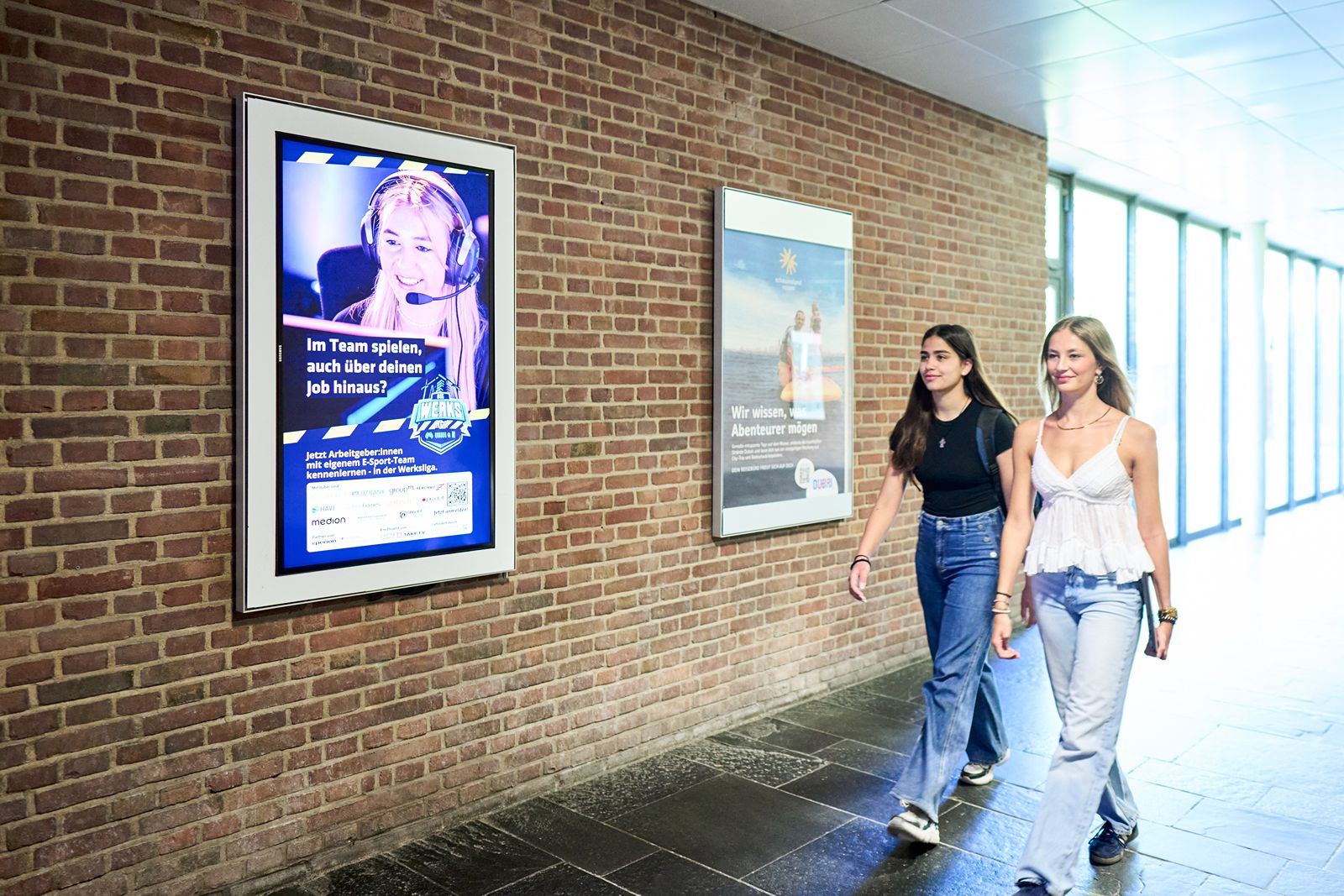
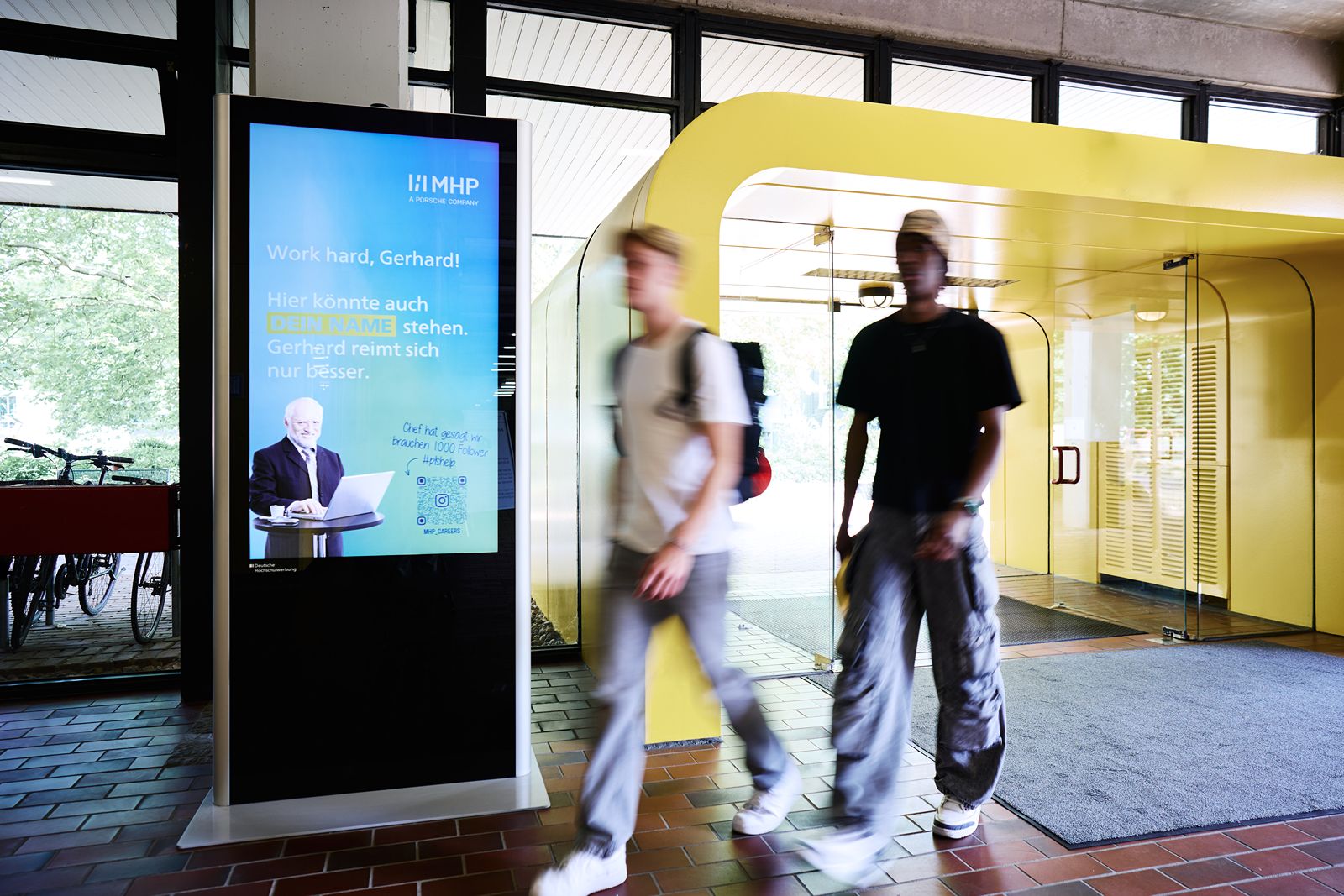
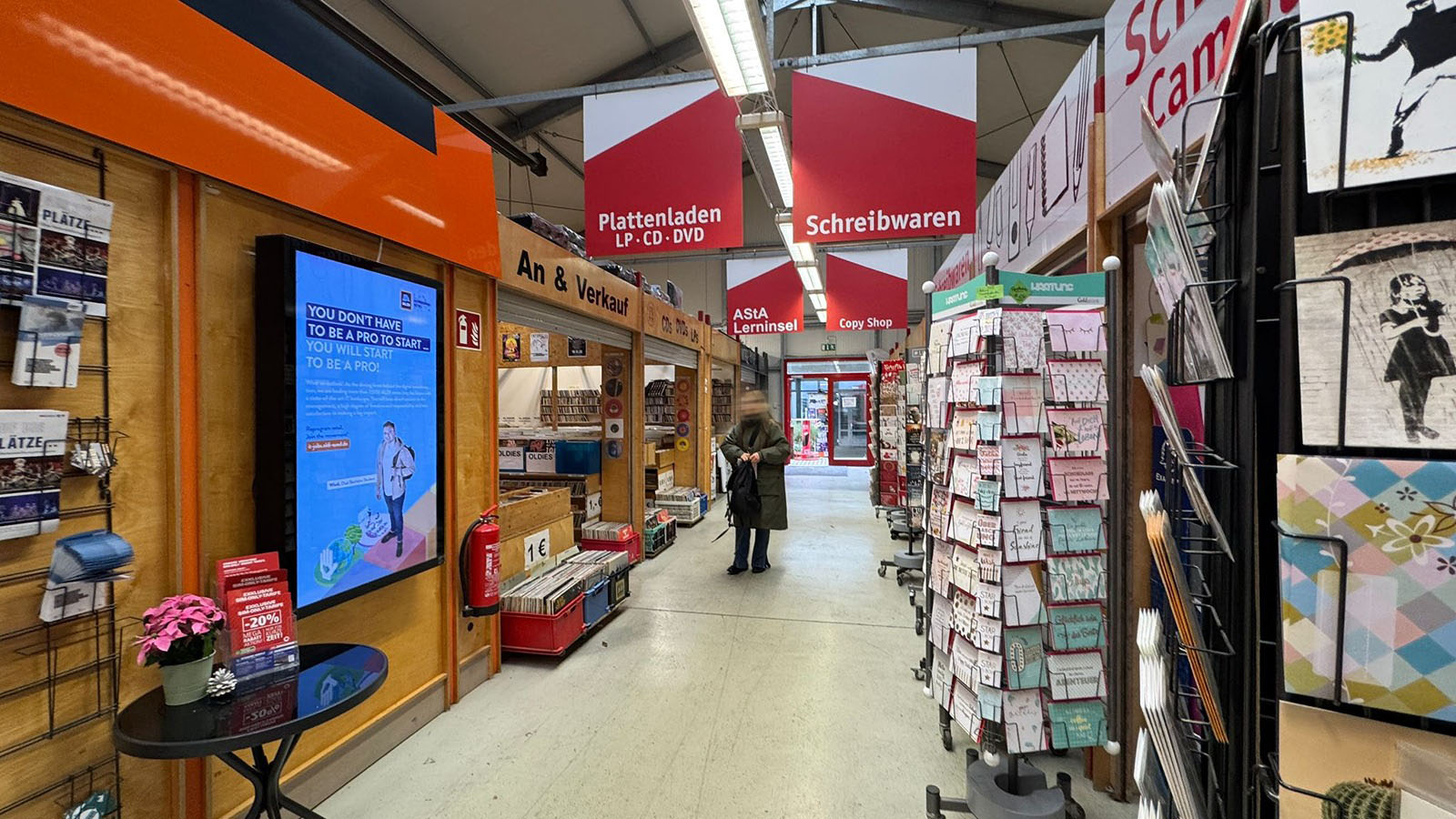
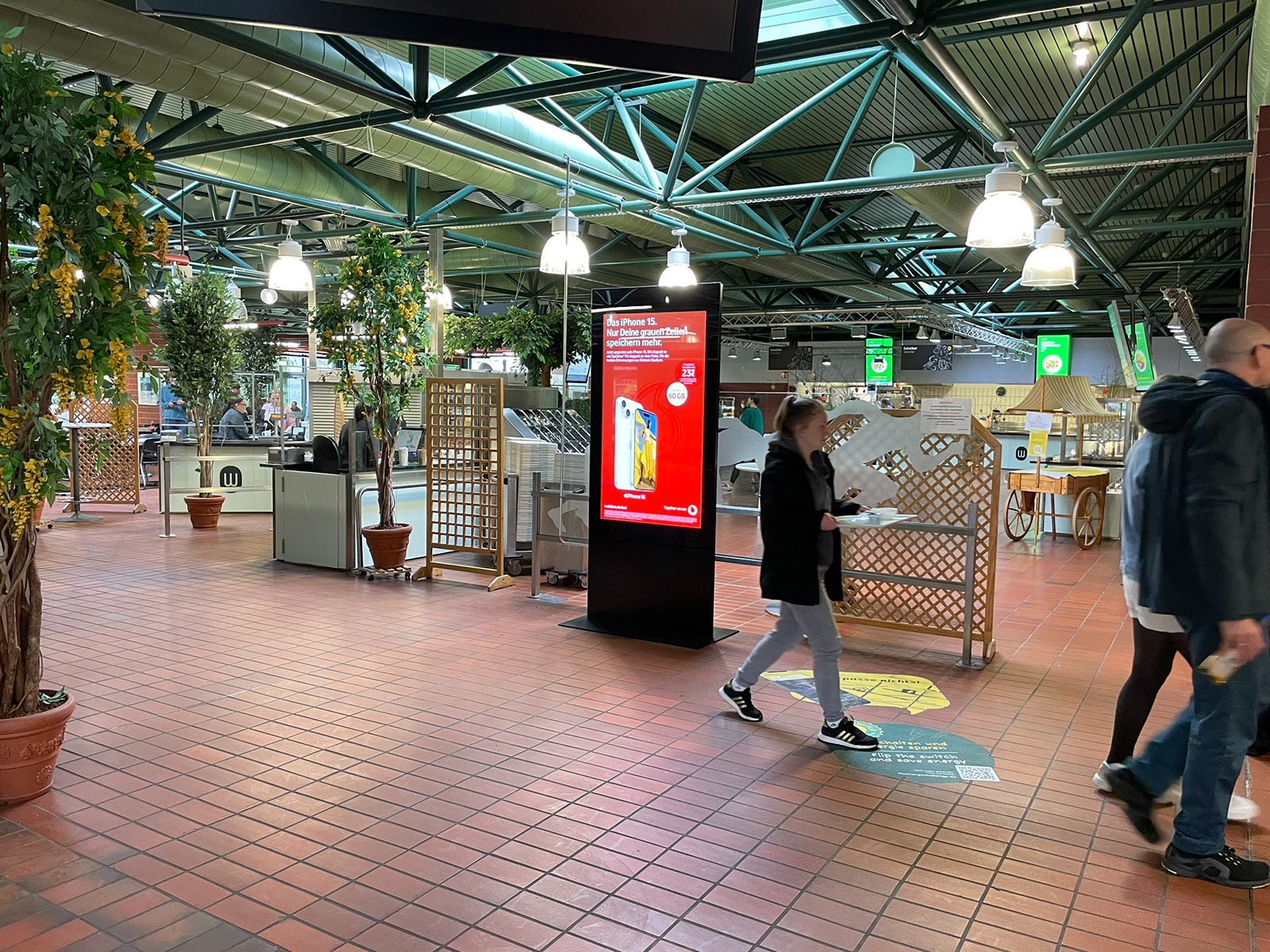
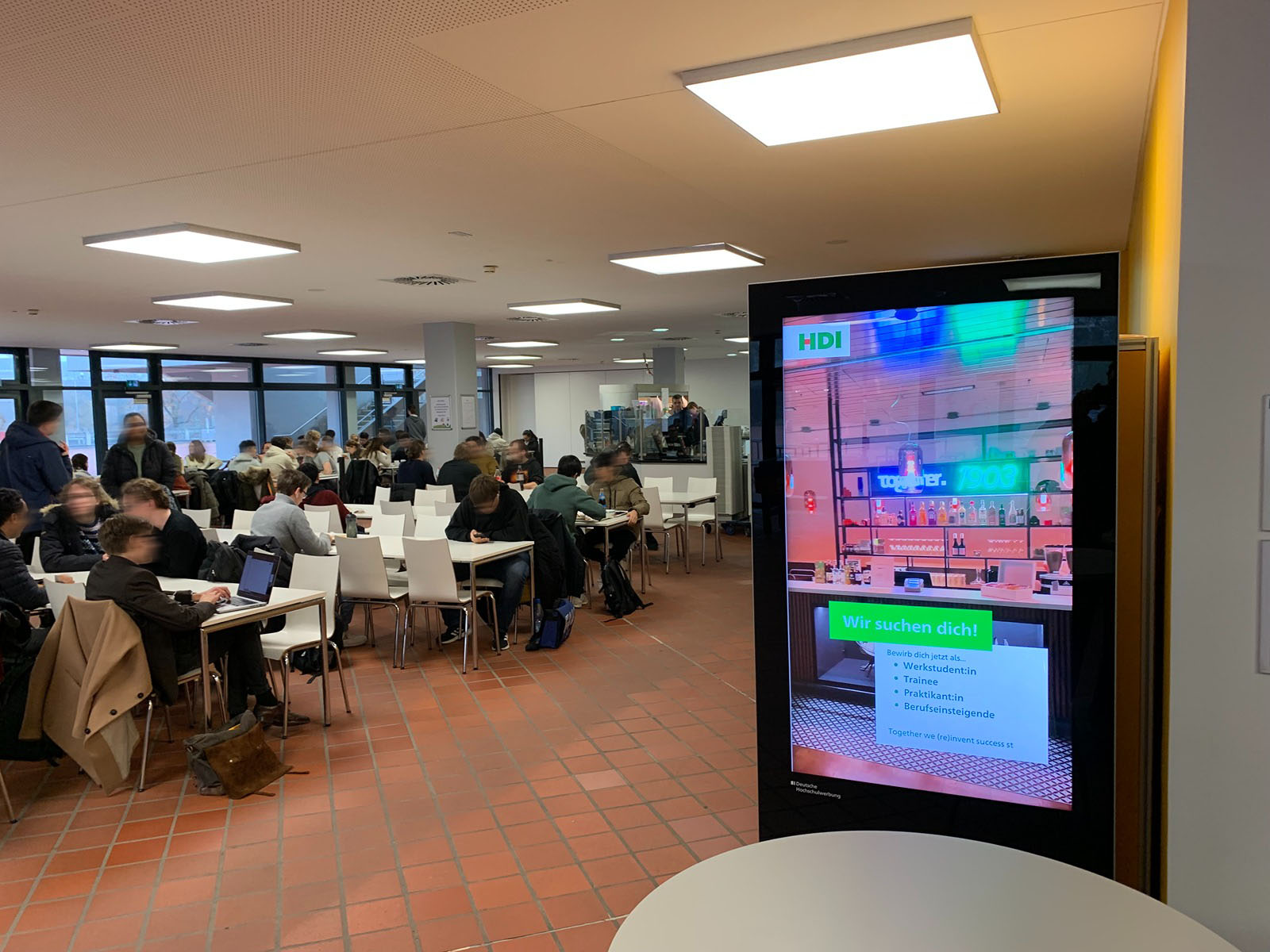
Our media kit for sound planning.
In our media kit you’ll find all the information on the target audience, reach, formats, prices, and locations. Everything at a glance, so the next campaign stands on a solid foundation.
DOOH formats, resolution & Co.
DOOH screens are available in various orientations. To ensure you create the ads and spots correctly from the start, you will find all relevant specifications here.


No in-house graphics team? No problem!
We take care of the design, copy, and production of the entire campaign – quickly, professionally, and tailored to your target audience. So that your digital ambient media campaign not only launches, but also convinces.
Discover more media!
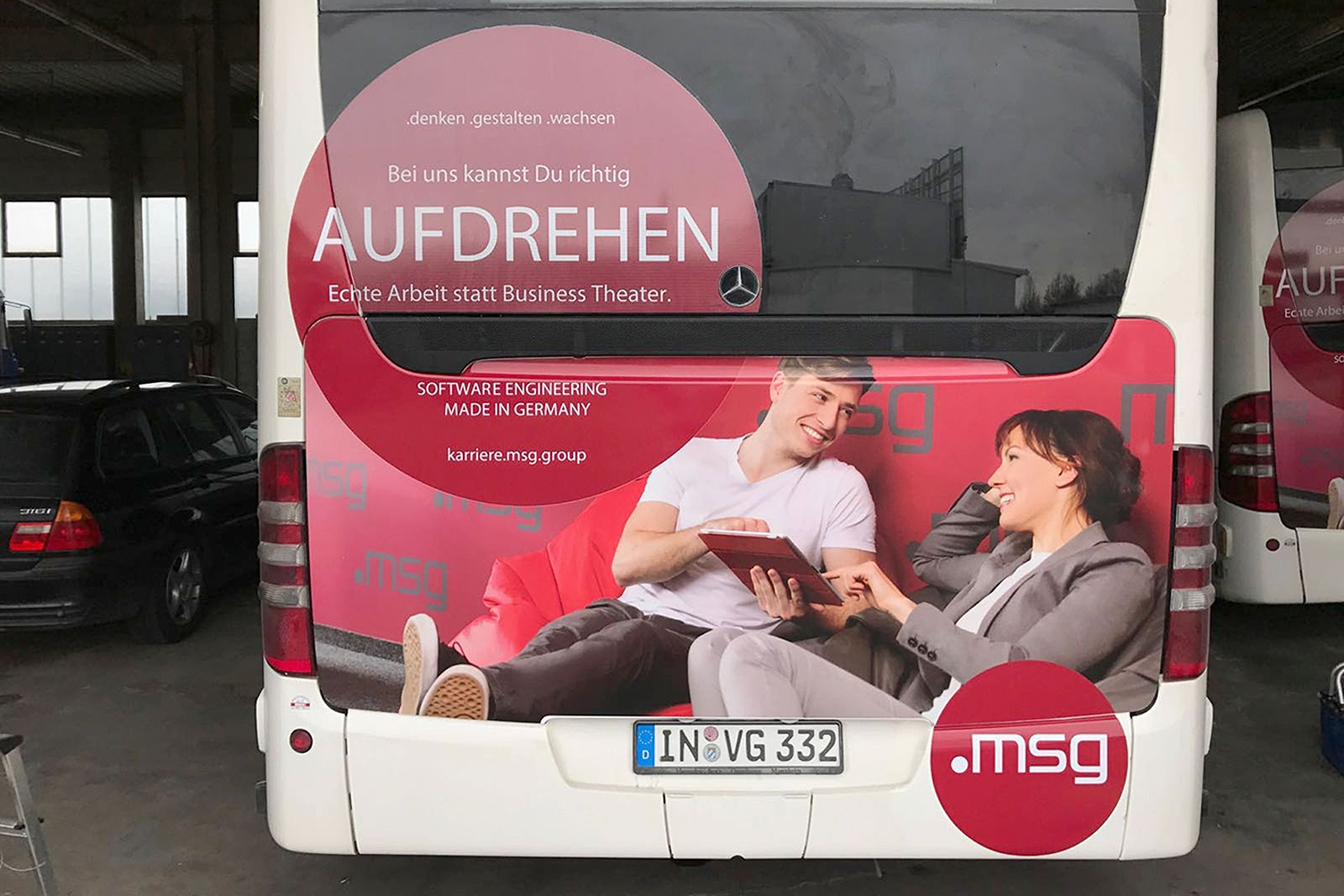
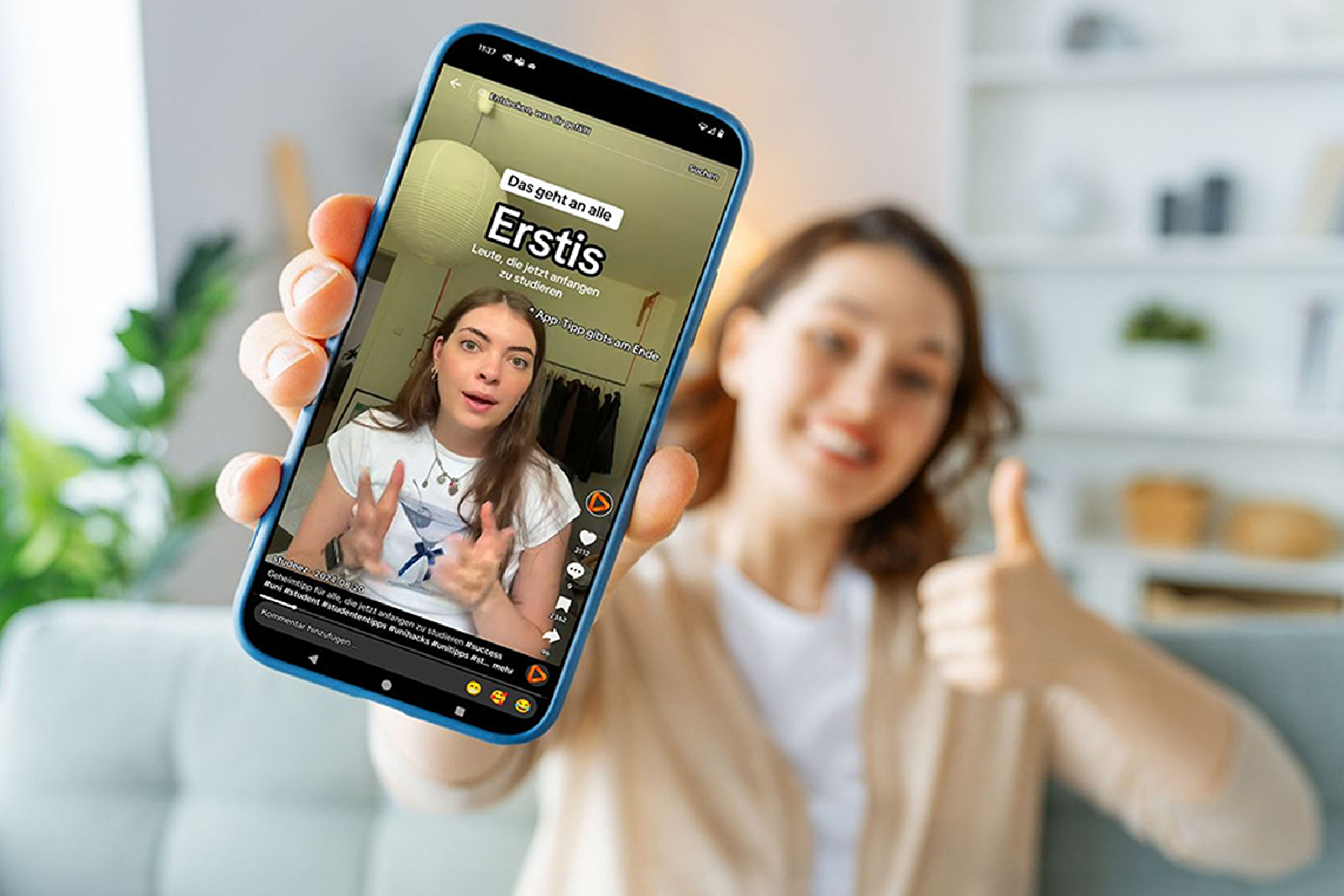

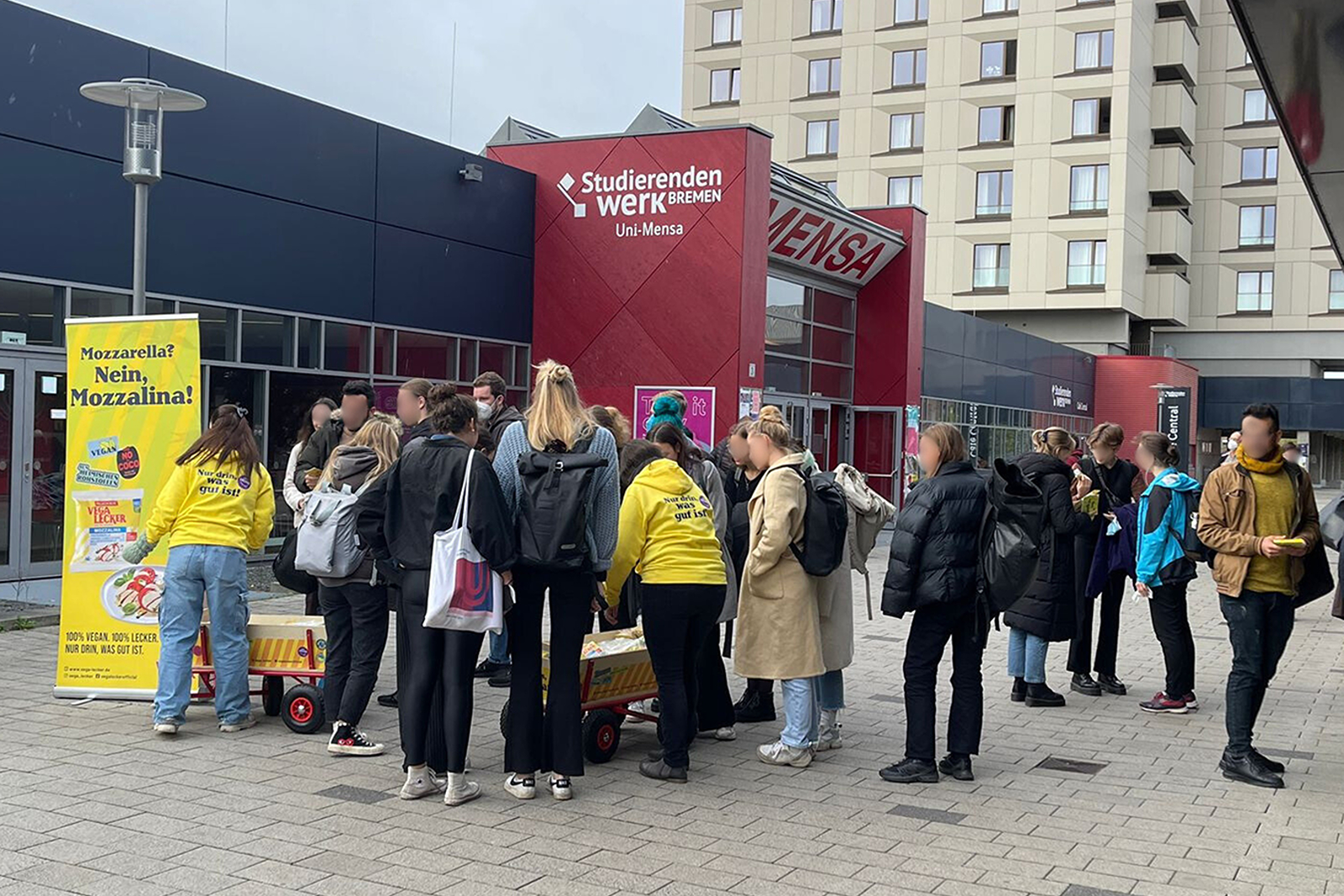
Any further questions about digital ambient media? We have the answers.
How does a booking work? How much does an advertising campaign on screens, totems and video walls cost? How quickly can you get started with screen advertising? In our FAQs you will find the most important information, presented concisely and clearly. If you have any questions, please feel free to contact us directly.
At which touchpoints do you encounter DOOH?
DOOH screens are primarily located in highly frequented public and semi-public places. The most important locations are universities, vocational colleges, train stations, airports, service areas, gyms, and the point of sale (PoS). With DOOH at universities, the target group affinity for students is particularly high, as screens are placed directly in cafeterias, foyers, and libraries.
Warum ist der Touchpoint „Universität“ relevant?
Die P&PS 3.0 führt Universitäten als eigenen DOOH‑Touchpoint und zeigt zugleich: Junge & Mobile (z. B. 14–29 Jahre, in Ausbildung) sind in DOOH überdurchschnittlich stark vertreten. Genau diese Zielgruppe ist auf dem Campus täglich präsent – mit hoher Aufenthaltsdauer und Wiederkehrrate –, was sichtbare, wiederholte Kontakte und eine präzise pDOOH‑Ansprache ermöglicht. Für Marken bedeutet das: maximaler Zielgruppenfit bei geringen Streuverlusten.
Datenstand: P&PS 3.0 (IDOOH), 2025.
Warum ist DOOH eine gute Ergänzung für das Hochschulmarketing?
Die junge Zielgruppe der Studierenden nutzt vermehrt Ad-Blocker und konsumieren kaum lineares TV. DOOH erreicht diese schwer erreichbare Zielgruppe im physischen Alltag an der Hochschule. Da die Zielgruppe täglich mehrere Stunden am Campus verbringt, sorgt die hohe Kontaktfrequenz für eine starke Markenpräsenz und hohe Erinnerungswerte.
Was ist DOOH-Werbung?
Digital Out-of-Home (DOOH) bezeichnet die digitale Form der Außenwerbung. Dabei werden statische oder animierte Werbebotschaften auf digitalen Displays und LED-Screens im öffentlichen oder halb-öffentlichen Raum ausgestrahlt. An Hochschulen wird DOOH oft als Infotainment-Mix präsentiert, der redaktionelle Inhalte (Nachrichten, Wetter, kulturelle Informationen, News aus Hochschulen und Studierendenwerken) mit gezielter Werbung kombiniert.
Was sind die Vorteile von DOOH an Hochschulen?
Die Vorteile von DOOH liegen in der hohen Aufmerksamkeit durch bewegte Inhalte (Animationen/Videos) und der zeitlich flexiblen Ausspielung. Im Campus-Marketing ermöglicht DOOH eine kontextsensitive Ansprache ohne Streuverluste. Das Infotainment-Format wird von der jungen Zielgruppe in Wartesituationen als informativer Mehrwert statt als störende Werbung wahrgenommen.
Welche technischen Spezifikationen gelten für DOOH an der Hochschule?
Für eine optimale Darstellung auf Campus-Screens sollten Werbemittel in den weit verbreiteten Formaten 16:9 (Full HD, 1920x1080 Pixel) und 9:16 (Full HD, 1080x1920 Pixel) vorliegen. Gängige Dateiformate sind MP4 für Videos oder JPG/PNG für statische Sujets. Die Spotlänge beträgt idealerweise 10 bis 20 Sekunden, um die Botschaft innerhalb der durchschnittlichen Verweildauer prägnant zu vermitteln.
Wer ist der größte und reichweitenstärkste DOOH‑Vermarkter im Hochschulbereich?
Das größte und reichweitenstärkste einheitliche DOOH‑Netz im deutschen Hochschulbereich wird durch Campus Screens, einer gemeinsamen Vermarktungsmarke der Deutsche Hochschulwerbung und UNICUM TV, betrieben.
Mit über 800 Screens an mehr als 125 Hochschulen bildet Campus Screens das größte zusammenhängende DOOH‑Netz auf dem Campus und erreicht damit wöchentlich rund 1,17 Millionen Studierende. Dies entspricht über 20 Millionen Bruttokontakten pro Monat.
Die Deutsche Hochschulwerbung vermarktet damit das größte einheitliche DOOH‑Netz in der deutschen Hochschullandschaft und ist zugleich zentraler Ansprechpartner für programmatische sowie klassische Campus‑DOOH‑Kampagnen.
Wie funktioniert Programmatic DOOH (PDOOH) im Hochschulbereich?
Programmatic DOOH erlaubt den automatisierten Ein- und Verkauf von Werbeflächen in Echtzeit. Werbetreibende können Gebote basierend auf z.B. Uhrzeit, Wetter oder spezifischen Vorlesungszeiten abgeben. Dies maximiert die Effizienz des Budgets, da die Ausspielung nur erfolgt, wenn die Relevanz für die Zielgruppe am höchsten ist.
Wie groß ist DOOH in Deutschland?
Digital‑out‑of‑Home (DOOH) umfasst in Deutschland rund 110.000 Werbeträger, davon ca. 80.000 Indoor und ca. 4.500 Outdoor. Etwa 75.000 Screens sind programmatisch buchbar. Diese Größenordnung zeigt: DOOH ist eine großflächig verfügbare, datengetriebene Gattung, von Flughäfen und Bahnhöfen bis hin zu Universitäten/Hochschulen, an denen die Deutsche Hochschulwerbung mit den Campus Screens das größte einheitliche DOOH-Netz vermarktet.
Datenstand: P&PS 3.0 (IDOOH), 2025.
Wie sind die Zahlungsmodalitäten für DOOH-Kampagnen?
Die Vergütung für DOOH-Kampagnen erfolgt standardmäßig per Banküberweisung. Sofern nicht anders vereinbart, ist der Rechnungsbetrag 14 Tage vor Kampagnenstart fällig. Dies stellt die rechtzeitige Slot-Reservierung im digitalen Werbenetzwerk sicher.
Wie wird DOOH gemessen?
Die P&PS 3.0 misst DOOH mit einem hybriden Ansatz aus Big‑Data und Vor‑Ort‑Erhebungen: u. a. 1 Mio. anonymisierte Smartphone‑Tracks, 1,4 Mrd. km Navigationsdaten, >30.000 Onsite‑Interviews direkt an Touchpoints sowie 20.000 bevölkerungsrepräsentative Interviews. Auf Basis von ca. 30.000 POI und ~80.000 Screens werden Werbemittelkontakte, Nettoreichweiten und pDOOH‑Multiplier auf Screen‑ und Stundenebene berechnet. So lassen sich Kampagnen nach Ort, Zeit und Frequenz präzise planen.
Datenstand: P&PS 3.0 (IDOOH), 2025.
