
Product Sampling at Universities
Product Sampling at Universities
Product sampling at universities is one of the most effective tools in university marketing for products. Few other forms of product promotion enable such direct initial contact with the target group of students. Companies can present their products where students learn, live, and shop.
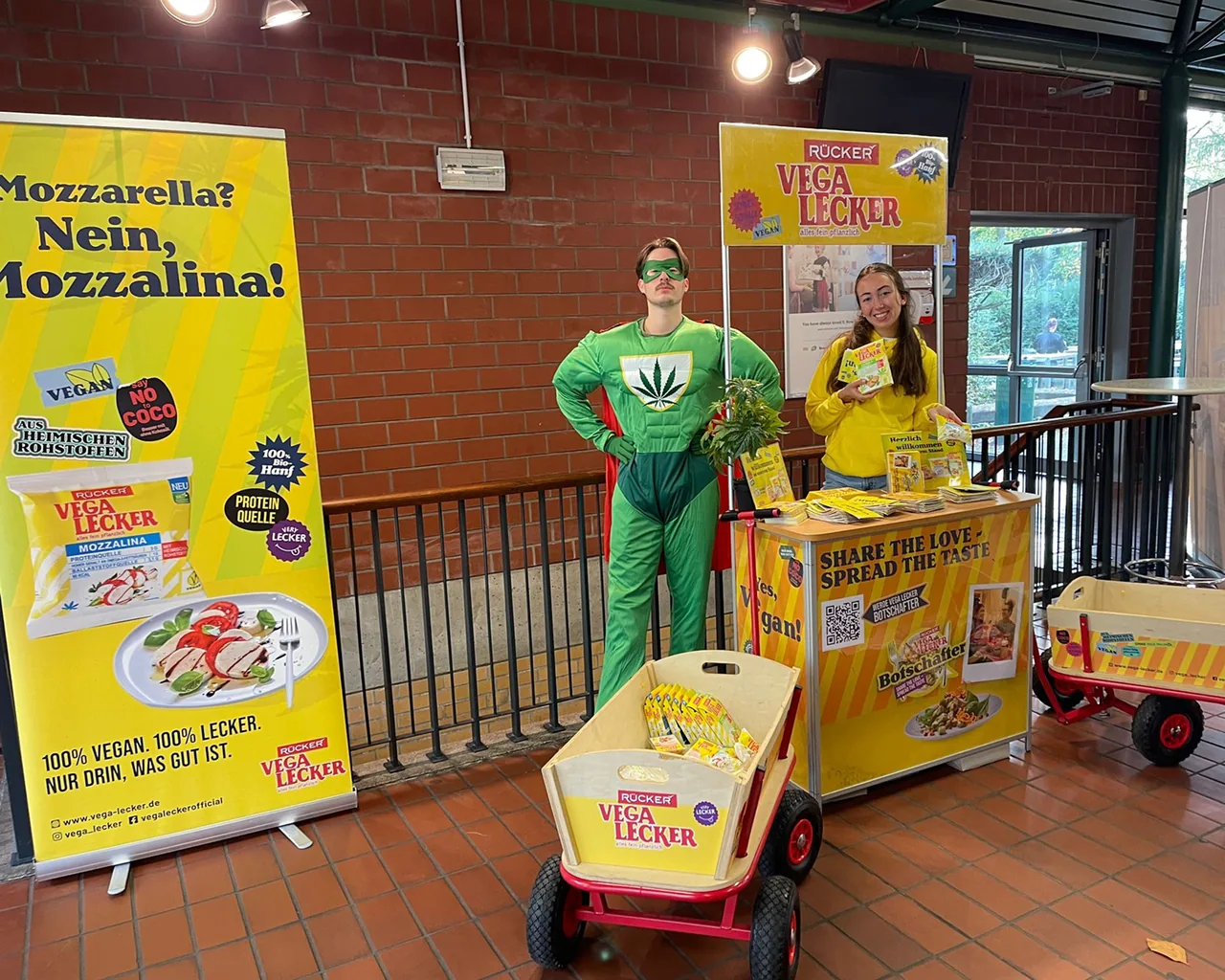
How do you plan successful product sampling at universities?
Because young target groups aged 18 to 29 are highly concentrated at universities, product sampling can be carried out with comparatively little wastage, while embedding brands in people’s memories for the long term. Companies benefit from a target group that is open to new products and at a stage of life when many purchasing decisions are being made independently for the first time. Supporting advertising measures using poster advertising or DOOH create additional awareness and can help ensure that many students notice the product presentation.
At the same time, this target group has particular expectations: students are digitally connected, compare offers closely, and value authenticity, sustainability, and clear added value. To ensure that product sampling on campus does more than attract attention and also delivers measurable results, companies should consider the following points when planning, carrying out, and evaluating a campaign.
Would you like to learn more about your options? Get in touch with us!


Campaign planning: the foundation for success
Defining objectives: What should the campaign achieve?
Before planning logistics, distribution locations, and quantities, companies should clearly define the objective of their university product sampling campaign to ensure that its goals can be achieved.
Depending on the starting point, campus sampling can serve different purposes: often, the goal is to raise awareness of a new brand or product and give people their first experience of it. Other companies use sampling campaigns at universities to conduct product tests, gather feedback, or introduce their offering to a young target group for the first time.
Product sampling can also be used strategically to build social media reach, drive traffic to landing pages or apps, gain newsletter subscribers, or prepare for a later market launch.
At this stage, companies should also decide how campaign success will be measured. Possible metrics include the number of product samples distributed, QR code scans, coupon redemptions, social media mentions, or sales during the campaign period.
The 2026 Student Barometer shows that campus advertising does more than attract attention—it prompts concrete responses: “7 out of 10 students (72.1%) have taken action as a result of advertising on campus.” Particularly relevant to product sampling: “38.4% have taken part in an on-site promotion, 32.4% have searched for a brand on Google, 29.0% have visited an advertised website or app, and 8.8% have purchased a product or signed a contract.” For sampling campaigns, this means that campus is suitable not only for initial contact, but also for measurable follow-up actions, such as website visits, app downloads, coupon redemptions, or direct participation at a promotional stand.*
Practical tip: One of the most common mistakes in product sampling at universities is trying to achieve too many goals at once. Companies that want to increase awareness, gain newsletter subscribers, generate app downloads, and measure sales all at the same time risk failing to meet any one metric effectively. In practice, sampling campaigns work best when one primary objective is clearly defined and all activities are aligned with it.
What works particularly well for product sampling at universities
Experience shows that certain product groups achieve above-average results at universities.
Top of the list are food, beverages, and snacks. Students often spend many hours on campus and look for quick, convenient ways to get something to eat or drink. Product sampling is therefore particularly successful outside dining halls, cafeterias, and busy campus areas.
Functional food products also benefit from the university environment. Topics such as concentration, energy, and performance are particularly prominent during exam periods.
Coffee and tea products are also campus sampling classics. They can be consumed right away and are a perfect fit for typical situations such as lectures, study groups, or library visits.
In addition, cosmetics and personal care products, digital offerings such as apps or software solutions, and services relevant to student life are particularly well suited to this target group. Insurance products can also be promoted successfully, since many students are dealing independently for the first time with topics such as personal liability, contents, or occupational disability insurance.
Experience shows: The success of a sampling campaign depends not on the size of the product sample, but on its relevance to the situation. A small energy bar before an exam can be much more effective than a high-end product distributed without any connection to an immediate need. The context of use is often more important than the sample’s retail value.
Common mistake: Companies often overestimate students’ willingness to engage intensively with a product. On campus, lectures, study groups, dining hall visits, and many other activities compete for attention. Products whose benefits take a long explanation to understand therefore often achieve significantly poorer results than products with immediately tangible benefits.
Source: * 2026 Student Barometer.
Assessing product suitability
Not every product is equally suited to successful product sampling on campus. As a general rule, the easier a product is to try and understand, the greater its chances of success.
Before launching a campaign, companies should answer four simple questions:
- Can the product be tried right away?
- Can its benefits be understood in just a few seconds?
- Does the product fit into student life?
- Is there potential for repeat purchases?
The more often the answer to these questions is “yes,” the better suited the product is for campus sampling.
Defining the right target group
One of the biggest advantages of university sampling is the ability to target audiences precisely. However, “students” are not a homogeneous group. The more precisely the target group is defined, the more effectively the campaign can be designed.
Segmenting by life situation, interests, or field of study can be particularly useful:
- Sustainability-minded audiences: Many students pay close attention to environmental and social considerations. Sustainable products are particularly well received by this group.
- First-year students: Students starting university are often going through a period of change. Many are moving away from home for the first time, organizing their lives independently, and are open to new products, brands, and services.
- Students in specific fields: Depending on the product, targeting individual faculties may make sense. Technology products, for example, often appeal to engineering or computer science students, while creative offerings are more likely to attract students in design or media programs.
- International students: They are often in a new environment and looking for offers that make student life easier or provide new experiences.
- Commuters: Students who travel long distances to university every day have different needs from those who live right on campus. Products related to mobility, food, or saving time can be particularly relevant to them.
- Students living in residence halls: Strong social networks often develop in residence halls. Positive product experiences can spread particularly quickly there.
- Students interested in sports: sports, fitness, and health play an important role at many universities. Accordingly, relevant products in these areas are in high demand.
Practical tip: Many companies still regard students as a single target group. In reality, the differences between a first-year student in a new city and a master’s student about to enter the workforce can be greater than those between two traditional consumer groups outside the university environment. The more precisely the target group is defined, the higher the campaign’s conversion rate is likely to be.
Best case study: A nationwide Vodafone campaign at more than 100 universities shows how precise campus targeting works. Rather than addressing the general public, the campaign promoted a mobile plan developed specifically for students directly in the university environment. The offer met the target group’s needs and generated considerable attention on campus.
Choosing the right time
Universities are generally active throughout the semester. Nevertheless, there are periods when product sampling can be particularly effective.
The start of the semester is one of the most attractive periods. Many students are back on campus regularly, while first-year students are finding their feet and are particularly open to new offers.
Exam periods also present interesting opportunities. Although students are highly focused, they are also open to products and services that help them study, stay organized, or keep going.
Career fairs and university fairs bring large segments of the target group together in one place. Companies meet students who are actively thinking about their future and are open to further opportunities.
Last but not least, summer festivals, university sports events, and campus events provide ideal conditions. The relaxed atmosphere encourages people to try new products and engage with brands.
Common mistake: Companies often plan around internal product launches or campaign periods rather than the university calendar. As a result, sampling campaigns sometimes take place when few students are on campus. Taking the semester structure into account and scheduling campaigns during particularly busy periods can significantly increase impact without increasing the budget.

Campaign design: more than just handing out product samples
Putting the product experience first
Successful product sampling at a university is not defined solely by the number of samples distributed. What matters is whether the target group immediately understands and experiences the product’s benefits.
Students encounter advertising messages every day. That is why simply handing over a product sample is rarely enough. It is much more effective when the sample can be experienced in a relevant context. A functional snack during exam period, a coffee on the way to a lecture, or a personal care sample after university sports creates an immediate connection between the product and the target group’s daily lives. The more authentic this connection, the more memorable the brand.
Practical tip: The most successful sampling campaigns don’t explain the product—they solve a specific problem. Students are initially less interested in product features than in personal benefits. Making it clear within a few seconds how the product makes everyday life easier often delivers better results than a detailed product presentation.
Considering sustainability in product sampling at universities
Sustainability is important to many students and should therefore be considered from the planning stage.
Environmentally friendly packaging, reducing single-use materials, and using shorter delivery routes can help improve the campaign’s environmental footprint. Transparent communication is equally important. Communicating sustainability credibly and putting it into practice in a clear, verifiable way can strengthen brand perception among the target group over the long term.
Connecting product sampling with digital touchpoints
Distributing product samples should not be the end of the customer journey. Successful companies use campus sampling as a starting point for further interactions.
QR codes on packaging can link directly to landing pages, discount offers, or product information. Competitions, exclusive vouchers, or special campus offers provide additional incentives to engage with the brand. App downloads, registrations, and newsletter sign-ups can also generate valuable contacts for future communications. An added benefit: digital touchpoints make campaign success much easier to measure.
Common mistake: Many campaigns end with the distribution of the product sample. This means a large part of their potential is lost. The most successful campus sampling campaigns direct students to a landing page, app, or social media channel, extending the initial contact beyond the sampling moment itself.

Execution: what matters on site
Planning sufficient quantities
Free product samples are generally very well received on campus. At the same time, the mood can quickly turn sour if the samples run out after only a short time. Visitor numbers are often underestimated, especially at large universities. Companies should therefore make realistic forecasts, plan adequate reserves, and, where appropriate, arrange for replenishments.
Practical tip: Nothing causes disappointment on campus faster than hearing “Sorry, we’ve run out.” Visitor numbers are often underestimated, particularly at promotions outside dining halls or in central campus squares. For product sampling at universities, planning slightly more than needed is therefore usually more cost-effective than running a campaign that ends early because samples have run out.
Choosing suitable distribution locations
When it comes to product sampling at universities, the quality of contacts is often more important than the number of samples distributed. Ideally, product samples are handed out in an environment where their benefits are immediately clear.
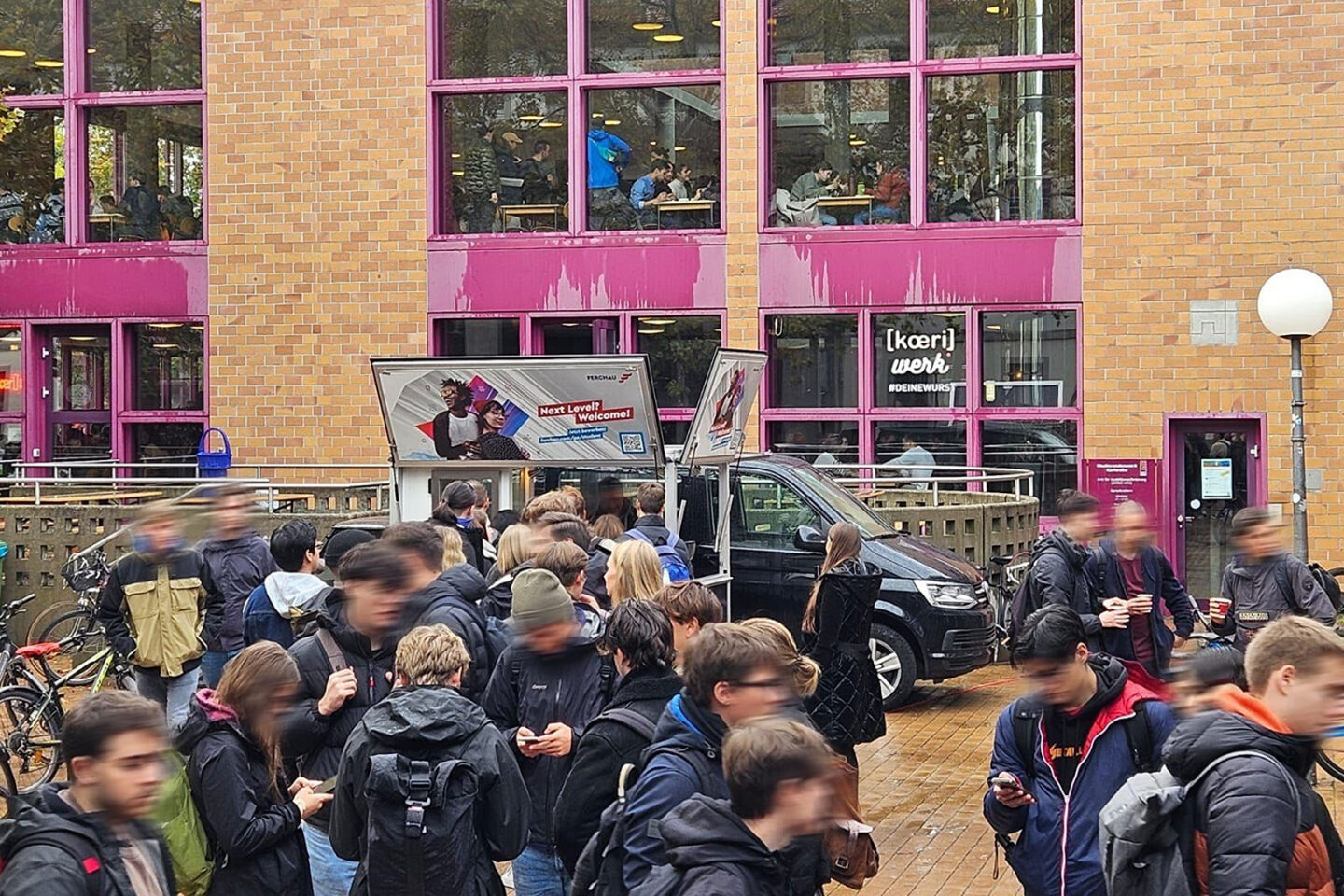
Dining halls and cafeterias have proven particularly effective, as they allow companies to reach large numbers of students every day. Libraries are ideal for products related to studying, concentration, or food. University fairs, orientation events, and career days also bring the desired target group together in one place. In addition, residence halls, welcome packages, or welcome bags for first-year students offer attractive ways to distribute product samples directly to students..
Practical tip: The busiest location is not automatically the best place to distribute samples. At universities, campaigns often achieve the best results where the product and the situation are a particularly good fit. Coffee outside the library or a snack outside the dining hall often works better than distributing products in a busy location that is not relevant to the product.
Briefing staff professionally
Anyone speaking with students on site is a direct representative of the brand. The promotional team should therefore not only know the product, but also understand the target group’s needs.
Authentic conversations on equal terms usually work much better on campus than traditional sales pitches. Well-prepared promoters can answer questions, explain benefits clearly, and create a positive first impression of the brand.
Common mistake: Students are much more sensitive to traditional sales pitches than many other target groups. Promoters who push for a sale are often turned away more quickly. Teams that show they are open to conversation, answer questions, and focus on letting people try the product are more successful.
Considering legal and organizational requirements
To ensure the campaign runs smoothly, organizational and legal matters should be clarified well in advance. These include, in particular, university permits, local rules, data protection requirements when collecting data, and food regulations when distributing food and drinks. If competitions are included, the relevant legal requirements must also be taken into account.
Practical tip: Many universities have detailed rules for promotions and advertising activities on campus. Companies that only begin coordinating with the university shortly before the campaign launch risk delays or restrictions. Coordinating with the relevant departments early on makes implementation much easier.

Evaluation: measuring success
Tracking relevant metrics
The impact of a sampling campaign should not be assessed solely by the number of product samples distributed.
For reach, the key metrics are the number of samples distributed, the number of students reached, and event attendance. QR code scans, landing page visits, app downloads, and newsletter sign-ups also provide important insights into the target group’s actual level of interest.
Metrics such as coupon redemptions, test purchases, registrations, or actual sales figures provide even more insight into product sampling at universities. They show whether the campaign actually prompted people to take action.
Companies should also monitor brand impact. Changes in awareness, purchase intent, likelihood to recommend, or social media mentions provide valuable insights into the campaign’s long-term success.
Gathering feedback directly from the target group
Students often provide valuable insights for improving future product sampling campaigns. Short online surveys, QR code-based feedback forms, social media polls, or small competitions can help gather opinions and suggestions for improvement. It is important to evaluate both the product itself and how the campaign was carried out.
Practical tip: The most valuable feedback is often gathered immediately after people try the product. Short mobile surveys accessed via QR code therefore often deliver better results than surveys conducted days or weeks later.
Documenting learnings
Every campaign should be followed by a structured review. The following questions, among others, can be helpful:
- Which locations achieved the best results?
- Which target groups responded particularly positively?
- Which messages were understood?
- Which digital activities achieved the highest conversion rate?
- What improvements can be made to future sampling campaigns?
The insights gained provide the foundation for even more successful product sampling campaigns in the future.
The most common mistakes in product sampling at universities
Even well-planned campaigns sometimes miss opportunities. In practice, the following five mistakes are particularly common:
- The target group is defined too broadly. Rather than targeting all students, companies should identify the segments most relevant to their product.
- The university calendar is not taken into account. Semester breaks, exam periods, and orientation weeks have a considerable impact on reach and response.
- Distribution is treated as an end in itself. Successful product sampling does not end with handing over a sample; it creates lasting brand engagement.
- There are no digital follow-up activities. Without QR codes, landing pages, or further offers, a large part of the marketing potential remains untapped.
- Campaign success is not measured properly. Without defined KPIs, it is difficult to draw reliable insights from the campaign for future activities.
“Successful campus sampling today means much more than handing out product samples: brands need to offer students genuine added value at the right moment. By intelligently combining product experiences, precise audience targeting, and digital follow-up opportunities, companies can create lasting, high-impact brand connections.”

Areti Karathanasi, �
Managing Director
Deutsche Hochschulwerbung
Discover the opportunities for campus promotions now!
FAQ about product sampling at universities
Warum eignen sich Hochschulen besonders für Produkt-Sampling?
Hochschulen zählen zu den wenigen Orten, an denen Unternehmen eine klar definierte Zielgruppe über einen längeren Zeitraum erreichen können. Anders als bei Veranstaltungen oder in Innenstädten halten sich Studierende regelmäßig und über mehrere Stunden auf dem Campus auf. Dadurch entstehen wiederkehrende Kontaktmöglichkeiten und eine besonders hohe Sichtbarkeit für Sampling-Kampagnen. Gleichzeitig lassen sich Streuverluste reduzieren, da Alter, Lebenssituation und Interessen der Zielgruppe vergleichsweise klar eingrenzbar sind.
Warum eignet sich die Zielgruppe Studierende für Produkt-Sampling?
Studierende befinden sich häufig in einer Phase, in der neue Marken ausprobiert und langfristige Kaufgewohnheiten entwickelt werden. Gleichzeitig lassen sie sich über den Campus mit vergleichsweise geringen Streuverlusten erreichen.
Warum sind Samplings im Hochschulkontext wirksam?
Die Zielgruppe der Studierenden ist digitalaffin, konsumfreudig und offen für neue Produkte; Campus‑Touchpoints ermöglichen streuverlustarme Ansprache der jungen Zielgruppe. Samplings liefern zudem unmittelbares Feedback und schaffen wiederholte Kontakte im Alltag.
Was ist „Sampling“ auf dem Campus?
Sampling bezeichnet die gezielte Verteilung von Produktproben an Studierende in Hochschulen und Betrieben der Studierendenwerke. Das Format senkt Testbarrieren, baut Markenbekanntheit und Vertrauen auf und eignet sich besonders für FMCG, Tech‑Gadgets oder Dienstleistungs‑Trials.
Was kostet Produkt-Sampling an Hochschulen?
Die Kosten hängen von Faktoren wie Anzahl der Hochschulen, Umfang der Produktproben, Verteilort, Personalaufwand und Kampagnendauer ab. Kampagnen können von einzelnen Hochschulaktionen bis zu bundesweiten Sampling-Touren reichen.
Welche Genehmigungen sind erforderlich?
Umsetzungen erfolgen in Abstimmung mit Hochschulen und Studierendenwerken; je Standort gelten spezielle Richtlinien und Vorgaben zu Flächen, Zeiten, Inhalten und Sauberkeit. Als zentraler Campus‑Partner übernehmen wir Anträge, Koordination und Reporting.
Welche Produkte eignen sich für Campus-Sampling?
Besonders erfolgreich sind Lebensmittel, Getränke, Snacks, Kaffeeprodukte, Functional Food, Pflegeprodukte, Apps, Software-Lösungen und studiennahe Dienstleistungen.
Wie funktioniert Produkt-Sampling an Hochschulen?
Beim Produkt-Sampling an Hochschulen verteilen Unternehmen kostenlose Produktproben direkt an Studierende. Ziel ist es, Produkterlebnisse zu schaffen, Markenbekanntheit aufzubauen und Kaufentscheidungen positiv zu beeinflussen.
Wo finden Samplings typischerweise statt?
Häufige Orte sind Mensen und Cafeterien, Eingangsbereiche, Bibliotheken, Hochschulsport, Events/Info‑Tage sowie Übergangs‑ und Wartezonen. Distributionslogistik und Genehmigungen werden von uns als Campus-Partner koordiniert.
